

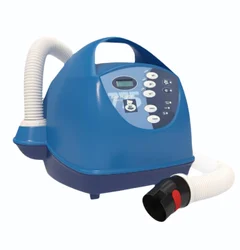
Bair Hugger Temperature Monitoring System
Our temperature monitoring system integrates seamlessly with Bair Hugger warming therapy to provide continuous, accurate patient temperature readings throughout surgical and recovery procedures. Designed for clinical environments where precise temperature management is critical, this system helps healthcare teams maintain normothermia and prevent complications associated with perioperative hypothermia.
The intuitive interface displays real-time temperature data, enabling clinicians to adjust warming protocols instantly based on patient response. We engineered this system to work alongside our forced-air warming units, creating a complete temperature management solution that supports better patient outcomes.
- Continuous temperature monitoring with 0.1°C resolution for precise tracking
- Compatible with standard temperature probes including esophageal, nasopharyngeal, and rectal sensors
- Large LED display visible from across the room in various lighting conditions
- Audio and visual alarms alert staff to temperature threshold deviations
- Stores patient temperature data for post-procedure documentation and analysis
System Compatibility and Integration
The Bair Hugger temperature monitoring system interfaces directly with our complete line of forced-air warming equipment. When paired with the Bair Hugger 775 warming unit, clinicians gain simultaneous control over both warming delivery and temperature assessment from a unified workflow.
Probe Compatibility
Our system accepts industry-standard temperature probes, eliminating the need for proprietary sensors. Esophageal probes provide core temperature readings during anesthesia, while skin surface sensors work well for pediatric and neonatal applications. Nasopharyngeal and tympanic probes offer additional monitoring options based on surgical site and patient positioning requirements.
Display Interface and Alarm Configuration
We designed the display to prioritize readability in demanding clinical environments. The LED screen shows temperature in large numerals visible from 15 feet away, allowing circulating nurses to monitor readings without interrupting sterile fields. Brightness adjusts automatically based on ambient light levels, maintaining visibility during both day and night shifts.
Customizable Alert Thresholds
Clinicians configure high and low temperature alarms based on patient-specific protocols and institutional guidelines. When readings fall outside set parameters, the system triggers both audible tones and visual indicators. Alarm volume adjusts across five levels to suit different room acoustics and background noise conditions.
Data Management and Documentation
Temperature data streams continuously to internal memory throughout each procedure. Our system stores up to 72 hours of trend information at 30-second intervals, creating a detailed thermal profile for every patient encounter. This historical data supports quality improvement initiatives and helps teams identify patterns that predict hypothermia risk.
Export and Electronic Health Record Integration
Many facilities connect the bair hugger temperature monitoring system to their electronic health records through standard HL7 interfaces. This integration eliminates manual transcription errors and ensures temperature readings appear automatically in anesthesia flowsheets. For facilities without EHR connectivity, the system exports data via USB to standard spreadsheet formats.
Complete Your Patient Warming Protocol


What people are saying
Common Questions About the Bair Hugger Temperature Monitoring System
The system accepts all industry-standard temperature probes with universal connectors, including esophageal, nasopharyngeal, rectal, skin surface, and tympanic sensors. Both reusable and disposable probes function properly.
You don’t need proprietary sensors, so facilities can continue using their existing probe inventory. The color-coded connection ports help staff quickly identify the correct attachment point during setup.
While the monitoring system and warming units operate independently, they’re designed to work side by side for coordinated temperature management. Placing both on the same equipment cart or pole mount creates a unified control station.
Clinicians can view patient temperature readings while adjusting warming blanket temperature settings, making it easier to respond to temperature trends in real time. The systems don’t require electronic pairing but complement each other functionally in perioperative protocols.
Yes, the bair hugger temperature monitoring system supports data export through HL7 interfaces compatible with most major EHR platforms. Your biomedical engineering or IT department can configure the connection to automatically send temperature readings to anesthesia flowsheets.
For facilities without EHR integration capabilities, the system stores data internally and exports via USB drive to standard CSV files that open in Excel or other spreadsheet applications. This allows manual record transfer while maintaining complete temperature documentation.
The internal lithium-ion battery provides approximately 90 minutes of continuous monitoring when disconnected from wall power. This duration covers most patient transports from preoperative holding through surgery and into PACU.
The battery charges automatically whenever the unit plugs into AC power, requiring about 3 hours for a full charge during normal operation. A display indicator shows remaining battery life, alerting staff when charge drops below 20%.
The unit’s housing withstands all common hospital-grade disinfectants, including quaternary ammonium compounds, diluted bleach solutions, and hydrogen peroxide wipes. The sealed membrane buttons and smooth surfaces prevent fluid ingress during cleaning.
We recommend wiping down all exterior surfaces with approved disinfectant wipes between each patient use. The unit can remain in rooms during terminal cleaning with hydrogen peroxide vapor systems. Avoid submerging the unit or spraying liquids directly into connection ports.
The system provides accuracy to ±0.1°C across its full measurement range when used with calibrated temperature probes. This precision matches or exceeds traditional mercury thermometry for clinical applications.
The continuous digital monitoring offers an advantage over intermittent manual readings by capturing temperature trends and rapid changes that spot-check methods might miss. The system ships with NIST-traceable calibration certification, and we recommend annual verification by qualified biomedical technicians.
Yes, clinicians can configure custom high and low temperature alarms for each patient based on age, procedure type, and institutional protocols. The system saves these settings throughout the monitoring session.
Alarm thresholds adjust in 0.1°C increments, allowing precise customization for pediatric patients, cardiac cases, or other situations requiring tight temperature control. Both audio and visual alerts activate when readings exceed configured limits, with adjustable volume levels to suit different room environments.